Blog
Jul 10, 2018
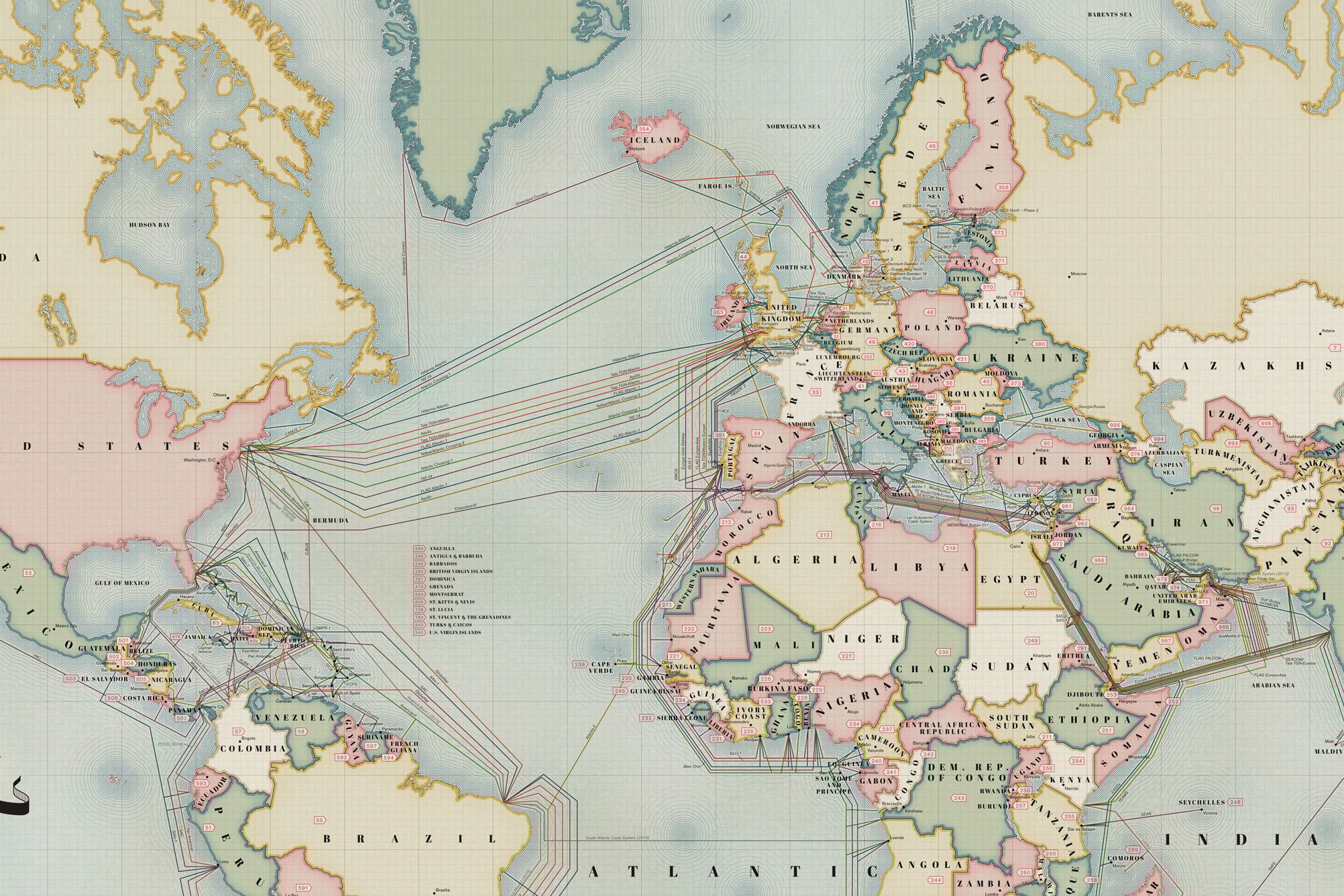
Our New E-book Contains Nearly 50 Maps and 20 Years of Telecom History
We’ve been making maps for a long time–since 1996, if you can believe it. Our maps don the walls of...

As we look at the massive AI boom sweeping across the globe, what does it actually take from a physical standpoint to keep these models running?
Why are submarine cable operators building networks just in case a surge of traffic arrives, and how is local power grid availability dictating exactly where the next major hubs are being built?
What role are legacy crypto-mining data centers playing now in AI infrastructure?
Today we're joined by a trio of TeleGeography experts to close out our series on the impacts of AI on global telecom. Host Greg Bryan sits down with Alan Mauldin, Patrick Christian, and Jon Hjembo to tie together the network, cloud, and data center layers of this infrastructure puzzle.
The group weaves together three TeleGeography research areas that have direct impacts on each other and the expansion of AI services:
The Long-Haul Network Buffer: Alan provides a crucial perspective on international bandwidth demand, reminding us that heavy networks cannot move at the speed of software. He explains why providers are securing fiber right now purely as a risk-mitigation strategy against future uncertainty.
The Rise of NeoClouds/GPU-as-a-Service: Patrick breaks down how a post-ChatGPT surge overwhelmed hyperscalers, leading to a boom in specialized "NeoCloud" providers—many of which evolved from legacy crypto-mining facilities located far from population centers.
Data Center Realities and Power Grids: Jon takes us inside the data center, revealing how a 35% pipeline surge between 2024 and 2025 has collided with intense local regulatory, water, and power bottlenecks in markets ranging from Dublin to Malaysia. We also dive into the fascinating "Pax Silica" geopolitical chip alliance.
This special episode is sponsored by Layer8 by Lightyear. This new event will bring together enterprise WAN operators, network engineers, and other IT/infrastructure leaders on November 4 at the Arlo Williamsburg in New York City. Notably, it's free to all enterprise end-users.
Jul 10, 2018
We’ve been making maps for a long time–since 1996, if you can believe it. Our maps don the walls of...
Dec 12, 2025
As our team prepares for Capacity Middle East 2026, we've rounded up the best resources to help you...
Feb 5, 2025
Digital Infrastructure Industry Expert Maya Glick has two decades in the digital infrastructure and...