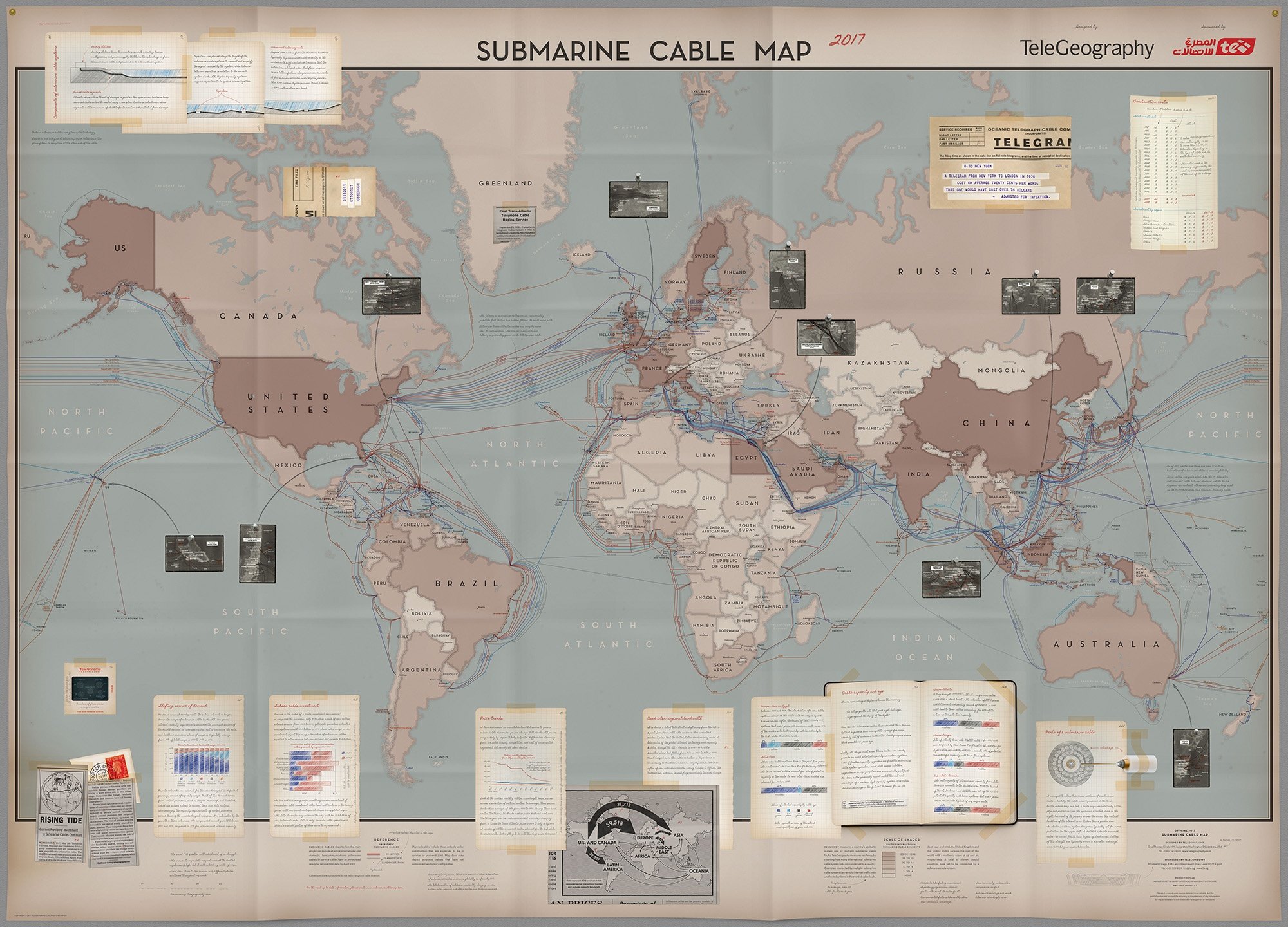
The State of Submarine Cable Maintenance
Today’s maintenance landscape is shaped by several converging pressures. Many cables deployed during the dot-com boom of the late 1990s are now nearing retirement. At the same time, investment in new systems is accelerating, adding hundreds of thousands of kilometers to the subsea network.
The maintenance ships that are vital for repairing faults are an aging fleet. Roughly 65% of cable maintenance vessels will reach the end of their lifespan within 15 years, but little investment has gone toward their inevitable replacement. Most are converted secondhand ships from other industries, raising concerns about efficiency and reliability. Meanwhile, governments are increasingly classifying submarine cables as critical national infrastructure, necessitating stronger resilience and faster repair times.
Modeling the Future of Submarine Cable Repair
To provide a data-driven foundation for industry discussions, Mauldin and Constable built a research model to forecast future maintenance needs. The model started with estimates of how many cables will be active over the next 15 years, factoring in both new builds and retirements. From there, it calculated
- Total cable kilometers
- Historic regional fault rates
- Vessel availability to project repair demands through 2040.
Their conclusion: by 2040, at least 15 new ships will be required to replace aging vessels, plus an additional five in Asia to meet rising repair demand. An investment of $3 billion is necessary just to maintain current service levels, not improve them.
The study also incorporated a broad industry survey, with over 60 stakeholders, including maintenance providers, hyperscalers, carriers, and governments. Half of respondents said they would be willing to pay more for maintenance services if it meant faster repairs, highlighting the value placed on resilience.
Subsea Cable Fault Hotspots, Risks, and Recommendations
While global subsea fault rates have been relatively stable, the study identified specific regions of concern. Southeast Asia, and particularly the South China Sea, accounts for nearly half of global annual faults. This is largely due to intense fishing activity, combined with overlapping maritime jurisdictional claims that complicate permitting and delay repairs. Other hotspots include the Red Sea and chokepoints between Taiwan, China, and the Philippines, where subsea landslides and geopolitical tensions increase risks.
In these regions, faster permitting processes, better collaboration between governments and industry, and diversified routing of new cables could all help improve resilience.
This research also highlights a broader shift in industry dynamics. Traditional carriers are stepping back, while hyperscalers like Google and Meta are now the primary investors in new systems. This changing ownership structure will shape how maintenance is funded and prioritized going forward.
The Future of the Industry
The submarine cable maintenance industry has long been in need of the data this report provides. Now that Mike and Alan have done the hard work of collecting and analyzing this data, stakeholders can move forward with strategies and policies to solve these problems.
With aging assets, concentrated regional risks, and growing government scrutiny, the cable industry faces a pivotal moment. Addressing these challenges will require collaboration, investment, and perhaps new economic models to ensure that the world’s digital lifelines remain resilient for decades to come.
.png)